
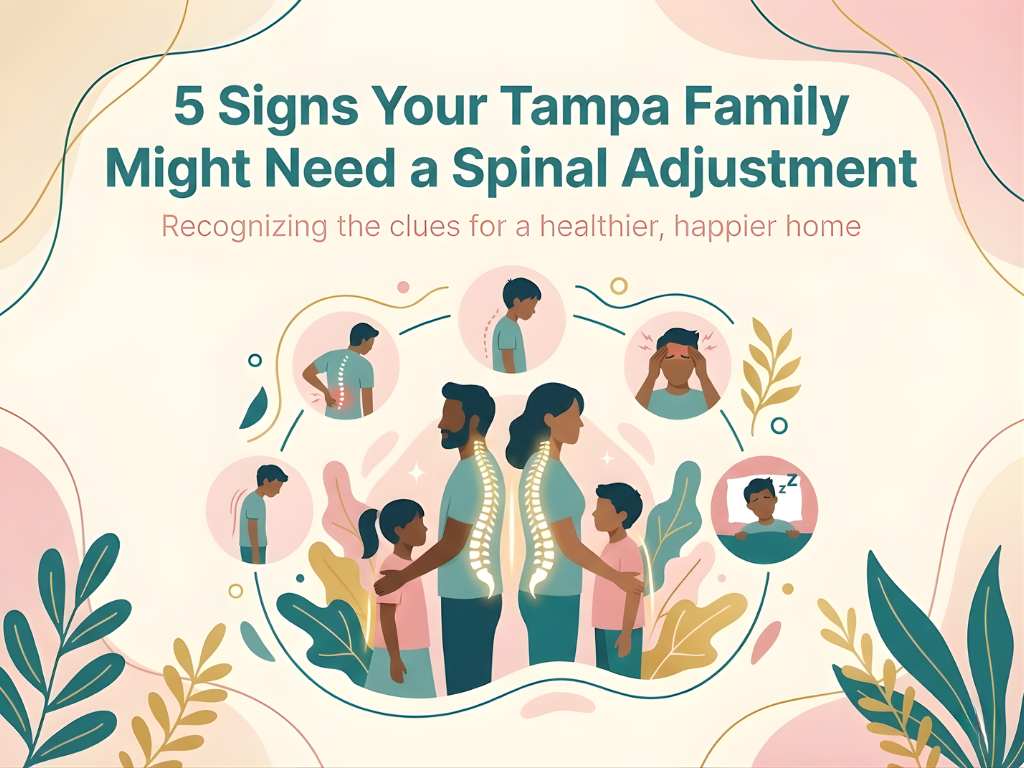
Every member of your family moves, sits, carries backpacks, plays sports, and stares at screens. Over time, all of that adds up to tension in the spine and nervous system. In Tampa, where families are active year‑round, many moms, dads, and kids don’t realize how much spinal stress they’re carrying until discomfort shows up.
At Bloom Wellness & Chiropractic, located at 13049 W. Linebaugh Avenue, Suite 102, Tampa, FL 33626, we see families from Westchase, Carrollwood, Oldsmar, and beyond who come in because something just doesn’t feel right. Often, a simple spinal adjustment can make a big difference in how everyone in the household feels and functions.
Below are five common signs that your Tampa family might benefit from a chiropractic spinal adjustment.
1. Recurring Back, Neck, or Joint Pain
One of the clearest signals that someone in your family needs a spinal adjustment is persistent or recurring pain in the back, neck, shoulders, or other joints. This isn’t about the occasional ache after a long day; it’s about discomfort that keeps coming back, even after rest, stretching, or over‑the‑counter pain relief.
For adults, this often shows up as a dull, nagging ache in the lower back after sitting at a desk or driving, stiffness in the neck or shoulders that makes it hard to turn the head comfortably, or shoulder or hip pain that flares up with certain movements. For kids, it may look like complaints of “my back hurts” after sports practice or a long day at school, or holding one side of the body differently or favoring one leg when walking.
When vertebrae in the spine shift out of alignment, they can irritate nearby nerves and muscles, creating ongoing pain and tension. Gentle spinal adjustments help restore proper alignment, reduce nerve irritation, and support the body’s natural ability to heal.
2. Noticeable Stiffness or Reduced Mobility
If your family members feel “stuck” or unusually stiff, that’s another strong sign the spine may need attention. Stiffness often appears as difficulty bending over to tie shoes or pick something up from the floor, trouble turning the head fully while driving or looking over the shoulder, or a feeling that the body “needs to be cracked” or loosened up.
For children, stiffness may show up as reluctance to participate in activities they usually enjoy, or as complaints of “tight” muscles after playing. In older adults, it can make everyday tasks like getting out of a chair, walking up stairs, or standing for long periods more challenging.
Spinal joints that aren’t moving properly can pull on surrounding muscles and ligaments, leading to tightness and restricted motion. Chiropractic adjustments help restore normal joint movement, which often translates into easier bending, twisting, and overall mobility for the whole family.
3. Frequent Headaches or Migraines
Headaches are one of the most common reasons people seek chiropractic care, and they’re often connected to the spine and neck. Many headaches—especially tension headaches and cervicogenic (neck‑related) headaches—start with muscle tightness and joint restrictions in the upper back and neck.
Signs that headaches may be linked to spinal tension include headaches that start at the base of the skull and move up toward the forehead, pain or pressure around the neck and shoulders before or during a headache, and headaches that worsen after long periods of sitting, driving, or looking at screens.
When the upper spine and neck are misaligned, they can irritate nerves and blood vessels that contribute to head pain. Gentle adjustments to the cervical and upper thoracic spine can reduce this irritation, often leading to fewer headaches and less intense episodes.
4. Uneven Posture or One‑Sided Discomfort
Have you noticed that one shoulder sits higher than the other, or that your child tends to carry a backpack on the same side all the time? Subtle posture changes can be a quiet sign that the spine is out of balance.
Other posture‑related red flags include a head that leans forward when sitting or walking, one hip that appears higher or more prominent than the other, and shoes that wear down unevenly on one side.
These imbalances often develop from habits like sitting at a desk, carrying heavy bags, or repetitive sports movements. Over time, they can strain muscles, joints, and the spine itself. A chiropractor can assess posture, identify areas of misalignment, and use adjustments plus guidance on ergonomics and movement to help your family stand and move more evenly.
5. Trouble Sleeping, Fatigue, or Irritability
Spinal health affects more than just pain and posture—it can influence sleep, energy, and mood. When the spine and nervous system are under stress, many people notice difficulty falling or staying asleep, waking up feeling stiff or sore, persistent fatigue even after a full night’s rest, or increased irritability, brain fog, or difficulty concentrating.
For children, this may look like trouble settling at bedtime, frequent night waking, or being unusually cranky or restless. For adults, it can show up as low energy at work or difficulty focusing at home.
Chiropractic care doesn’t “cure” sleep or mood issues directly, but by improving spinal alignment and reducing nerve irritation, it can support better nervous system function. Many families report improved sleep quality, more consistent energy, and a calmer mood after starting regular spinal adjustments.
When to Bring Your Whole Family In
Spinal stress doesn’t discriminate by age. From infants adjusting to birth forces to teenagers carrying heavy backpacks and adults managing long workdays, everyone in your family can benefit from periodic spinal check‑ups.
At Bloom Wellness & Chiropractic, we tailor care to each family member: gentle, low‑force techniques for babies and kids, comfort‑focused adjustments for pregnant and postpartum moms, and supportive care for dads and grandparents dealing with work‑related strain or aging joints.
If you notice any of these five signs in yourself or your children, it may be time to schedule a family spinal evaluation. Addressing small imbalances early can help prevent more significant problems down the road and keep your Tampa family moving, sleeping, and feeling their best.
Conclusion
Your family’s spine is the foundation of how everyone moves, sleeps, and feels every day. Recurring pain, stiffness, headaches, posture changes, and sleep or mood issues can all be signs that spinal adjustments could help. At Bloom Wellness & Chiropractic, we’re here to support your whole family with gentle, personalized care designed to restore balance and comfort.